

If your child has sensitive skin — eczema, contact dermatitis, general reactivity to certain fabrics — you'll know the frustration of finding clothing that doesn't irritate. The wrong fabric can turn a perfectly good day into an uncomfortable one. The right fabric, chosen carefully, can make a genuine difference.
Here's what parents of children with sensitive skin need to know about natural fibres, and why organic cotton in particular stands apart.
Why Synthetic Fabrics Cause Problems
Polyester, nylon, and acrylic — the fibres that dominate fast fashion children's clothing — are essentially plastics. They don't breathe. They trap heat and moisture against the skin, creating the warm, damp conditions that trigger irritation and eczema flare-ups. They also carry static, which can cause fabric to cling and rub.
Beyond the physical properties of the fibre itself, synthetic garments are often treated with chemical finishes — anti-wrinkle treatments, flame retardants, colour fixatives — that remain in the fabric and sit against your child's skin all day. For children with chemical sensitivities, these residues can be a significant trigger.
Not All Cotton Is Equal
Cotton is widely understood to be a skin-friendly fibre — and it is, in its natural state. But conventional cotton farming is one of the most chemically intensive agricultural processes in the world. Pesticides, herbicides, and synthetic fertilisers are used heavily, and residues from these chemicals can persist through processing into the finished fabric.
For children with sensitive or reactive skin, these residues matter. The difference between conventional and organic cotton isn't just environmental — it's directly relevant to what's touching your child's skin.
What Makes Organic Cotton Different for Sensitive Skin
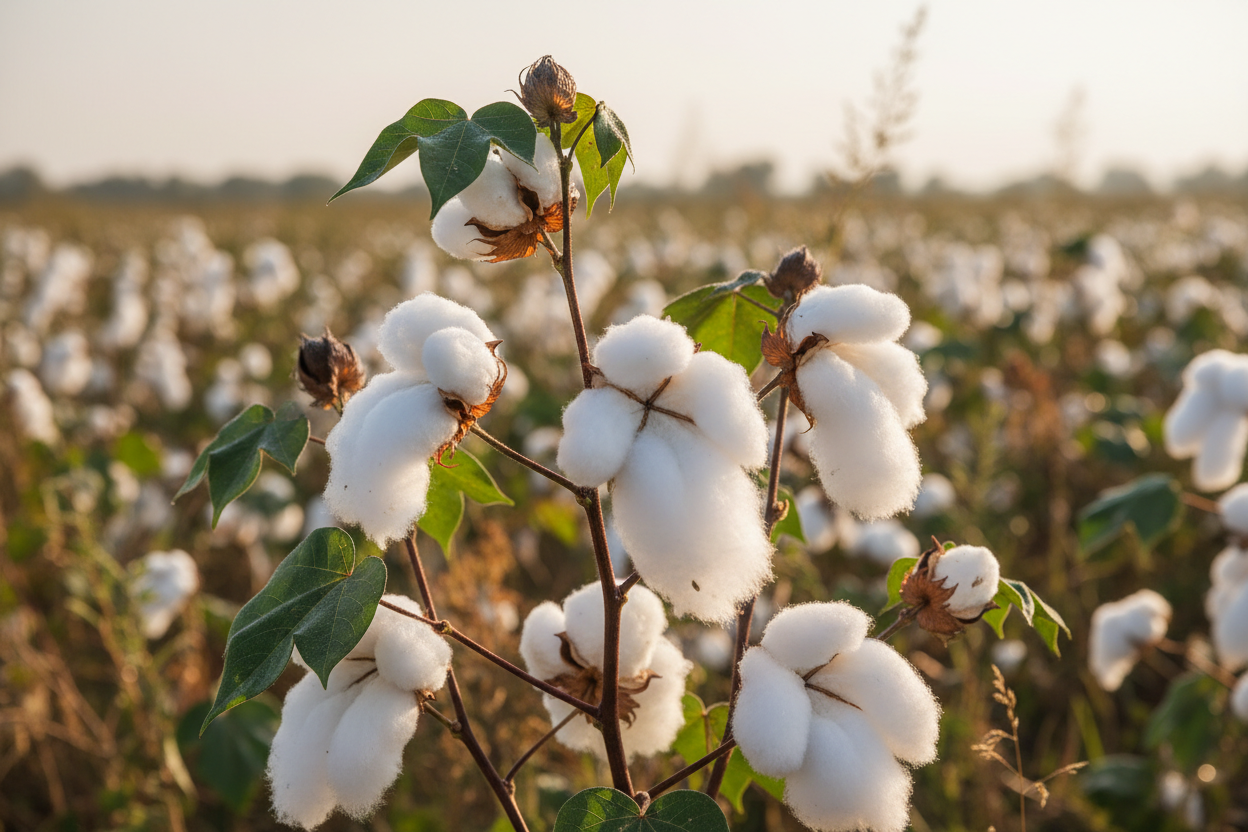
Certified organic cotton — grown without synthetic pesticides or herbicides, and processed without harsh chemical treatments — offers several specific advantages for sensitive skin:
- No pesticide residues — the fibre is cleaner from the start, with no synthetic chemical residues carried through from farming
- Gentler processing — organic certification covers the full supply chain, including dyeing and finishing, which means fewer harsh chemicals in the final fabric
- Natural breathability — organic cotton regulates temperature and wicks moisture naturally, keeping skin drier and cooler than synthetics
- Softer texture — without chemical softeners or bleaches degrading the fibre structure, organic cotton retains its natural softness and doesn't roughen with washing
- Hypoallergenic properties — the absence of synthetic chemical treatments makes organic cotton significantly less likely to trigger contact reactions
The Role of Cashmere in Our Blend
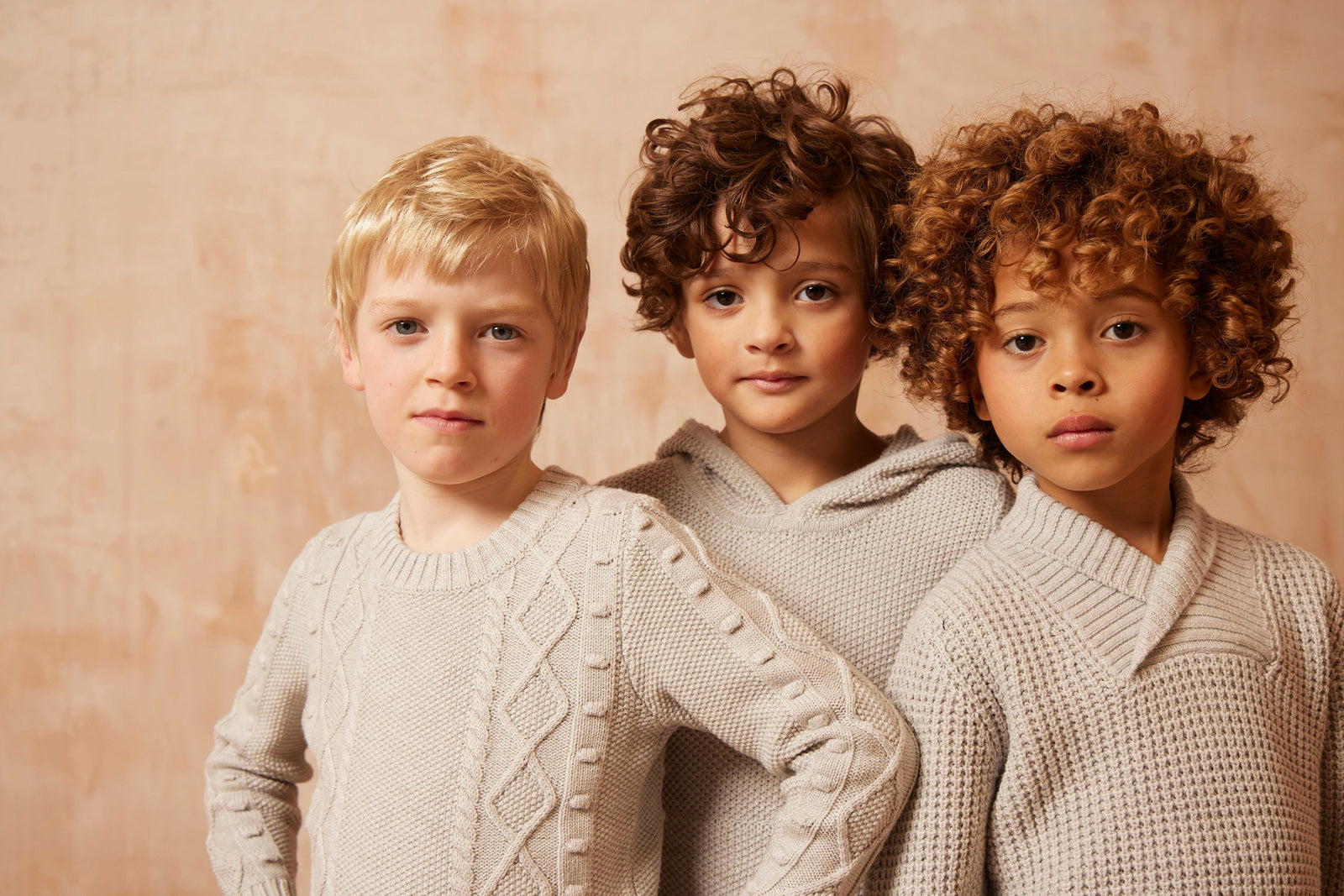
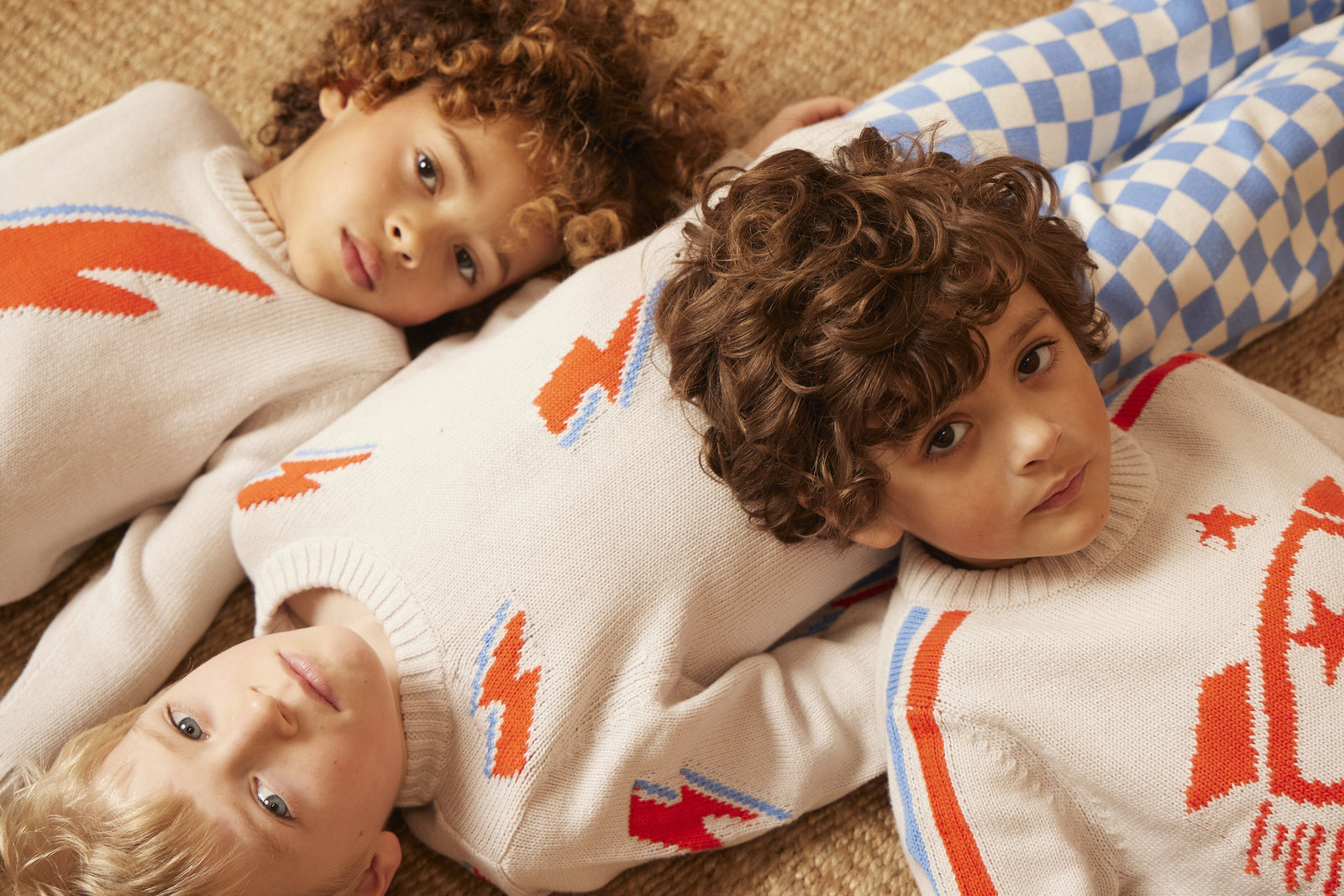
At MIKA & MILO, our knits are made from a 95% organic cotton, 5% cashmere blend — and the cashmere component is particularly relevant for sensitive skin. Unlike wool, which contains lanolin and coarser fibres that can scratch and irritate, cashmere is extraordinarily fine. The fibres are so smooth that they lie flat against the skin rather than standing up and causing friction.
The result is a fabric that combines the breathability and cleanliness of organic cotton with the exceptional softness of cashmere — a combination that works beautifully for children who struggle with conventional knitwear.
Many parents of children with eczema or sensitive skin tell us that our pieces are among the few knits their children can wear comfortably. That's not an accident — it's the direct result of choosing the right fibres and processing them responsibly.
What to Look For When Shopping for Sensitive Skin
If you're navigating children's clothing with sensitive skin in mind, these are the markers worth looking for:
- GOTS certification (Global Organic Textile Standard) — covers the full supply chain from farming to finished garment
- OEKO-TEX Standard 100 — tests the finished product for harmful substances, including pesticide residues, heavy metals, and formaldehyde
- Natural fibre content — look for organic cotton, cashmere, or merino as the primary fibre; avoid blends where synthetics dominate
- Minimal chemical finishing — avoid garments marketed as "wrinkle-free," "stain-resistant," or "easy-care" — these properties typically come from chemical treatments
- Tagless or soft-label construction — internal labels are a common irritant; look for printed labels or easily removable tags
A Note on Washing
Even the best natural fibre garment can become an irritant if washed with the wrong detergent. For children with sensitive skin, use a fragrance-free, dye-free detergent designed for delicates or sensitive skin. Avoid fabric softeners, which leave a chemical coating on fibres that can trigger reactions. An extra rinse cycle can help ensure all detergent residue is removed.
The Bottom Line
For children with sensitive skin, fabric choice is not a minor detail — it's one of the most impactful decisions you can make for their daily comfort. Organic cotton, particularly in a thoughtful blend like our 95/5 organic cotton and cashmere, offers a genuinely different experience: cleaner, softer, more breathable, and free from the chemical residues that trigger so many reactions.
It's clothing that works with your child's skin rather than against it.