

Cashmere is one of those words that gets used freely in fashion — on high street labels, in supermarket clothing ranges, on garments that cost less than a takeaway. But real cashmere, the kind that earns the name, comes from a very specific place, a very specific animal, and a very specific process. Understanding where it comes from changes how you think about it entirely.
The Cashmere Goat
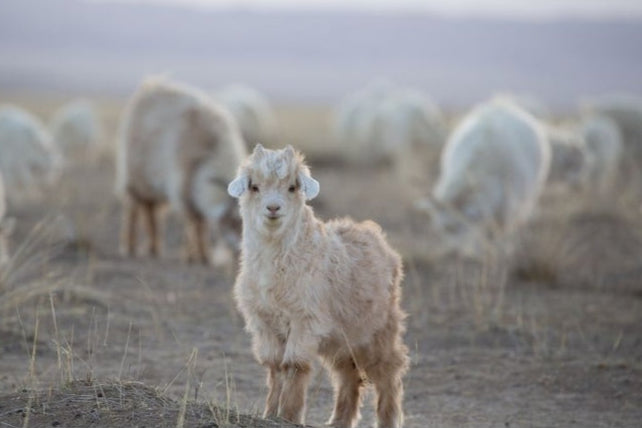
Cashmere fibre comes from the undercoat of the Capra hircus goat — a breed that has adapted over centuries to survive the extreme climate of the Mongolian plateau. Winters there reach -40°C. To survive, these goats grow an extraordinarily fine, dense undercoat that insulates them against temperatures that would be lethal without it.
It is this undercoat — not the coarser outer coat — that becomes cashmere. Each goat produces only 100 to 200 grams of it per year. A single adult sweater requires the annual yield of three to five goats. This scarcity is not a marketing story. It is simply the reality of the fibre.
Why Inner Mongolia?
Inner Mongolia, the autonomous region of northern China bordering the Mongolian steppe, produces some of the world's finest cashmere. The extreme temperature swings — bitterly cold winters, hot dry summers — are precisely what drives the goats to grow such an exceptionally fine undercoat. The harsh environment is, paradoxically, what makes the fibre so soft.
The region has centuries of herding tradition. Nomadic herding families have raised cashmere goats across these grasslands for generations, with knowledge of the animals, the land, and the seasonal rhythms passed down through families. This is not industrial farming — at its best, it is a relationship between people, animals, and landscape that has sustained both for hundreds of years.
The Combing Season
Cashmere is not sheared like wool. It is combed — gently, by hand — during the spring moulting season when the goats naturally shed their winter undercoat. This typically happens in April and May, when the animals are ready to lose their insulation as temperatures rise.
The combing process is labour-intensive and skilled. Done well, it causes no distress to the animal and yields the finest, longest fibres. Done poorly — or rushed to meet volume targets — it can damage both the animal and the quality of the fibre. This is one reason why the sourcing practices of a brand matter so much.
From Raw Fibre to Finished Garment
After combing, the raw cashmere is sorted by fineness and colour, washed, dehaired (the coarser outer fibres are removed), and spun into yarn. The finest cashmere — measured in microns, with the best grades under 15 microns — is almost imperceptibly soft against skin.
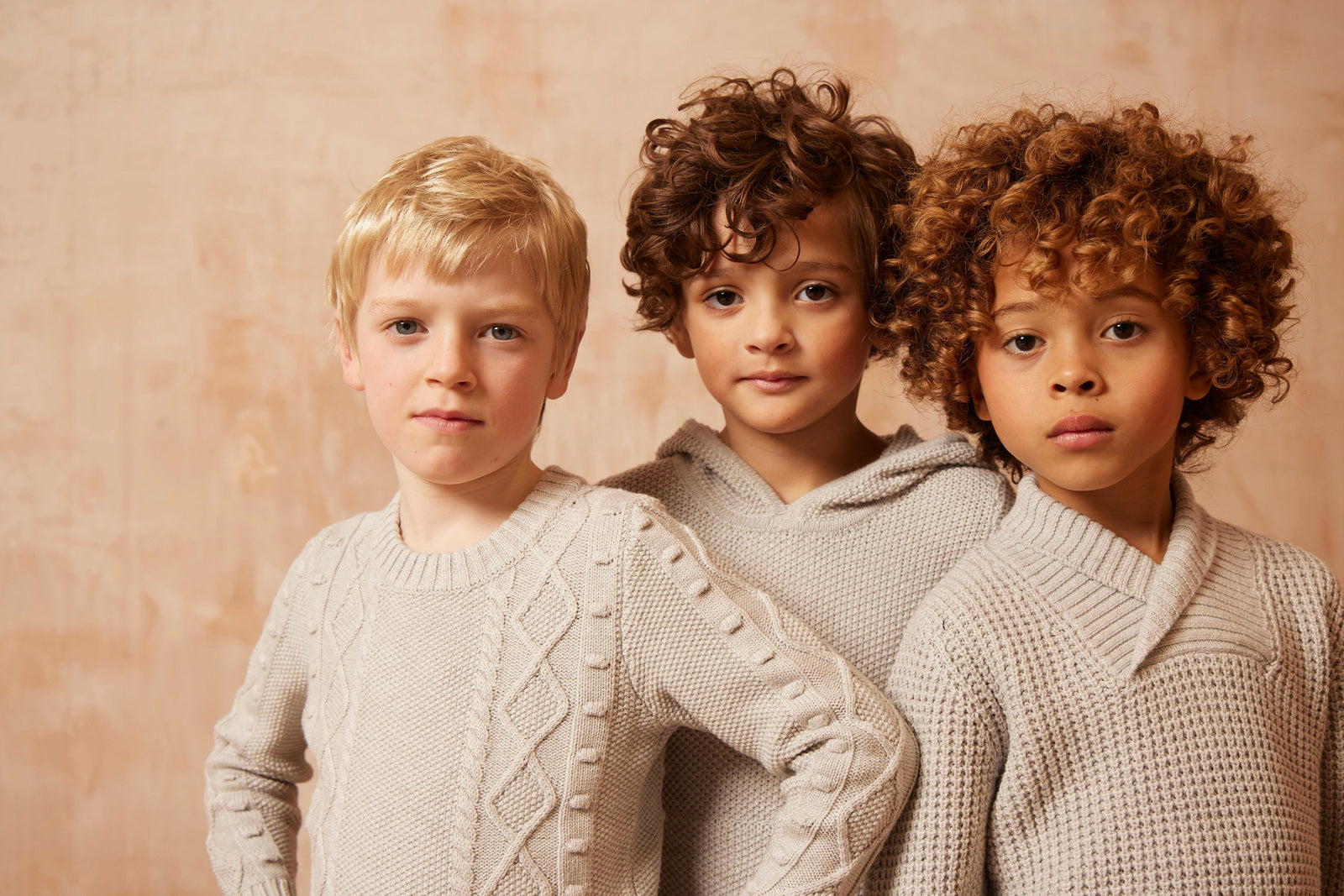
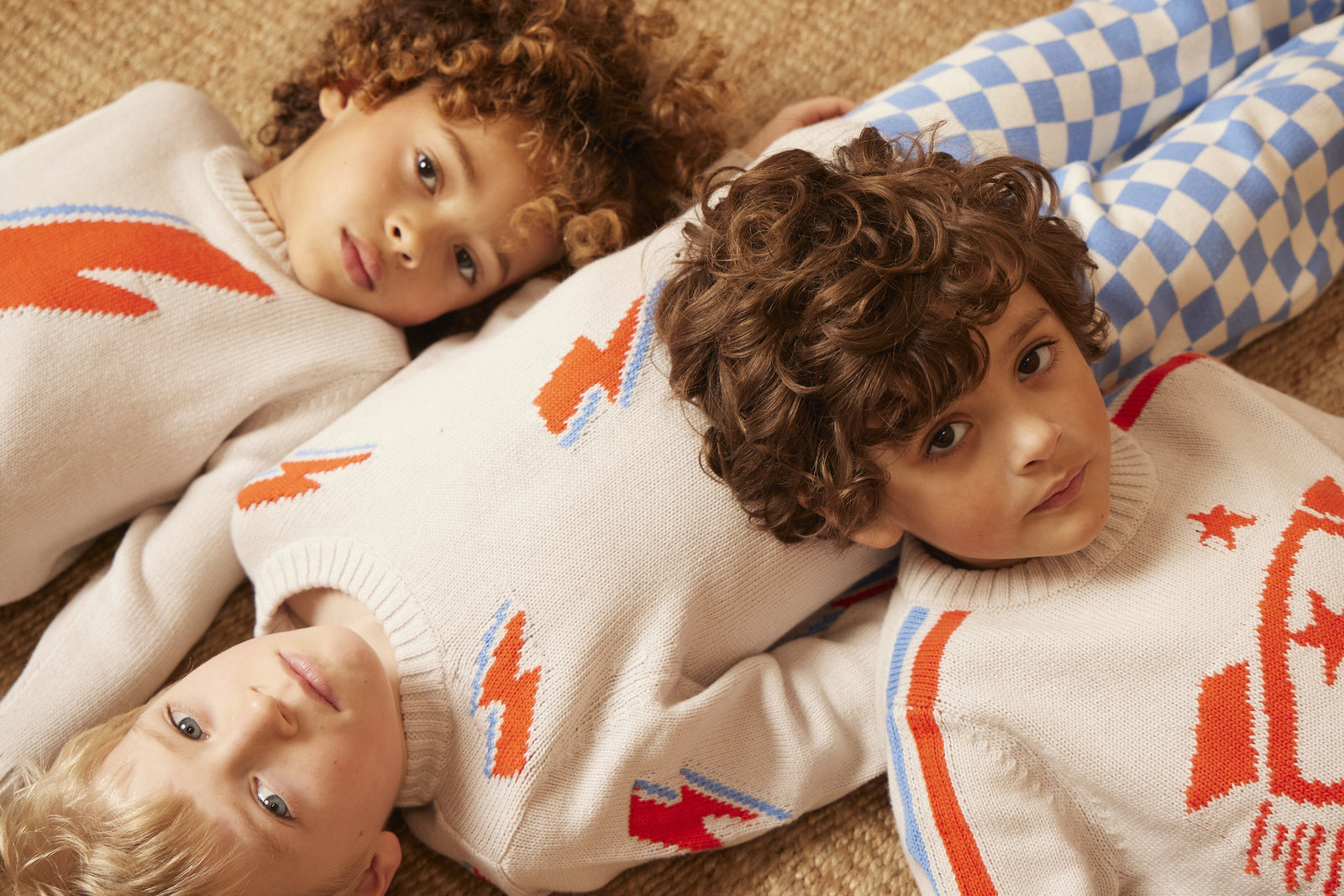
At MIKA & MILO, our knits are crafted from a 95% organic cotton, 5% cashmere blend — a composition we've chosen deliberately. The cashmere brings exceptional softness and a subtle warmth that organic cotton alone cannot achieve. The organic cotton provides structure, breathability, and durability. Together, they create a fabric that performs beautifully for children: soft enough for sensitive skin, robust enough for real life.
Why Sourcing Transparency Matters
The cashmere industry has faced well-documented challenges: overgrazing driven by demand for cheap cashmere, degradation of the Mongolian grasslands, and pressure on herding communities. These are real issues, and they are directly connected to the race to the bottom on price.
When you buy a £10 cashmere jumper, something in that supply chain has been compromised — the welfare of the animals, the livelihoods of herders, the quality of the land, or the quality of the fibre itself. Often all four.
Responsible sourcing — paying fair prices, working with suppliers who can trace their fibre, and choosing quality over volume — is the only way to support a cashmere industry that works for everyone in it. It's also how you get cashmere that actually feels and performs the way cashmere should.
What This Means for Your Child's Clothing
When you dress your child in a MIKA & MILO knit, the 5% cashmere in that blend has a story that stretches back to the grasslands of Inner Mongolia, to a goat that grew an extraordinary coat to survive an extraordinary winter, and to the hands that combed it in spring.
That's not sentimentality. It's provenance — and provenance is what separates a garment worth keeping from one destined for landfill.