

Back to school season brings with it a familiar ritual: the wardrobe audit, the shopping list, the attempt to buy enough without buying too much. For parents who think carefully about what their children wear, it's also an opportunity to apply slow fashion principles to the most-worn category of children's clothing — school clothes.
The Uniform Wardrobe Problem
Most school wardrobes are built on a false economy. Parents buy multiple cheap versions of each item — several shirts, several pairs of trousers — expecting them to last the year. In practice, cheap school clothing pills, fades, and loses its shape within weeks. By half-term, the wardrobe looks tired. By Christmas, it needs replacing.
The slow fashion alternative is to buy fewer, better pieces — and to extend the school wardrobe with quality non-uniform items that hold up to the same daily demands.
The Capsule School Wardrobe Formula
For most school-age children, a well-functioning school wardrobe needs:
- 3–4 uniform tops or shirts — enough to rotate through the week with one spare
- 2–3 uniform bottoms — trousers, skirts, or pinafores in good quality fabric
- 1–2 school layers — a cardigan or jumper for the classroom
- 1–2 non-uniform layers — for after school, weekend activities, and non-uniform days
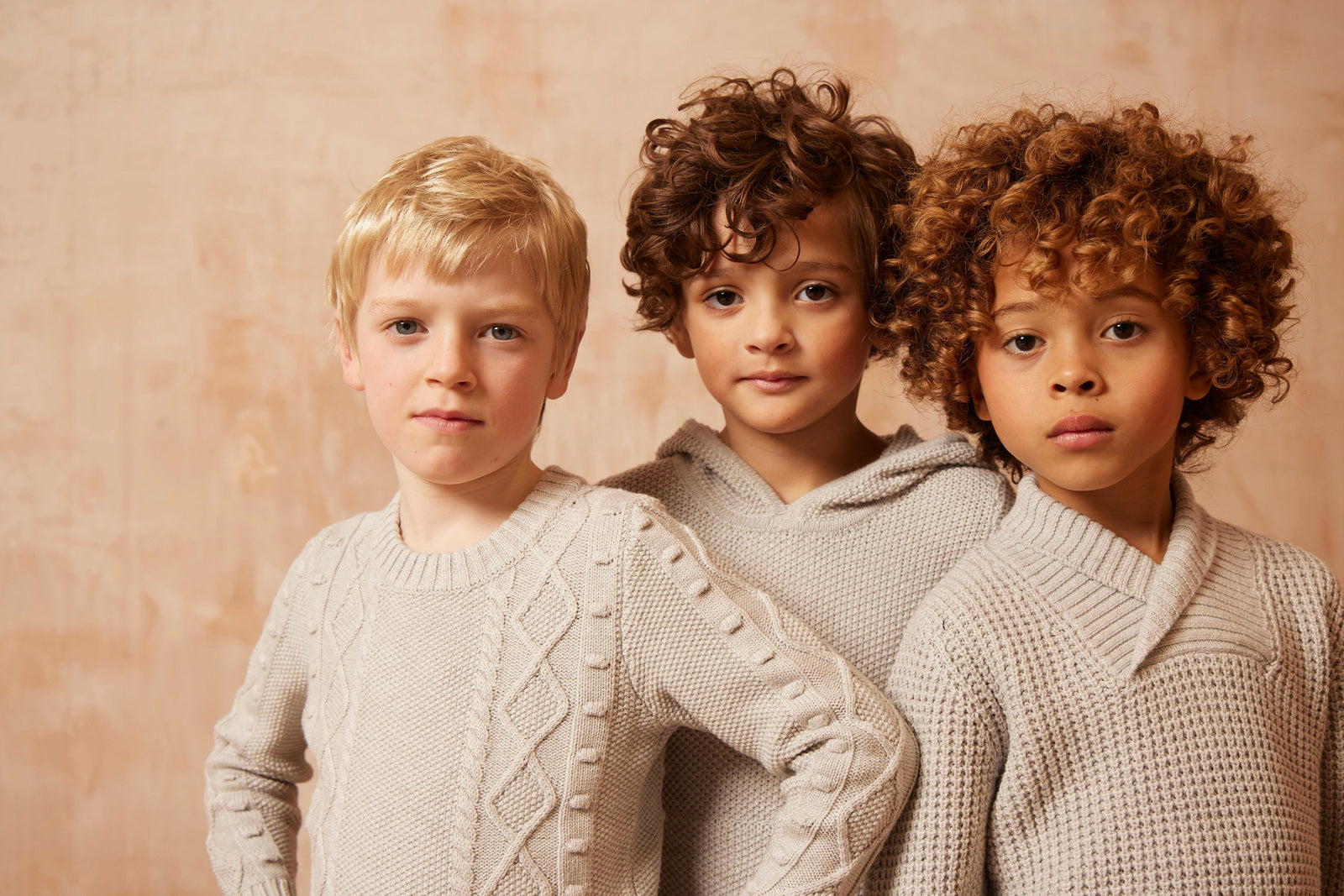
The non-uniform layer is where quality natural fibres make the biggest difference. A fine-knit cardigan in our 95% organic cotton, 5% cashmere blend worn over a school uniform transforms the after-school look instantly — and is soft enough to be comfortable through a full day of activity.
Why Natural Fibres Matter for School
Children spend six to eight hours a day in their school clothes. The fabric they're wearing matters for their comfort, their concentration, and their skin. Synthetic school clothing — polyester shirts, acrylic jumpers — traps heat and moisture, creating discomfort that children often can't articulate but definitely feel.
Natural fibres breathe. They regulate temperature. They feel better against skin across a full school day. For children with sensitive skin or eczema, the difference between a synthetic and a natural fibre layer can be significant.
The After-School Layer
The transition from school to after-school — clubs, playdates, family time — is where a quality natural fibre piece earns its place. A girls' cardigan or boys' fine-knit hoodie in our 95/5 blend thrown over a school uniform makes the transition effortless. It's comfortable enough for the playground, smart enough for a family dinner, and soft enough to wear all evening.
Buying for the Year, Not the Term
The slow fashion approach to back to school is to buy pieces that will last the full academic year — and ideally beyond. This means:
- Sizing up slightly on key pieces — children grow, and a piece bought with a little room will last longer
- Choosing classic colours — navy, grey, oatmeal, and white work across years and schools
- Investing in the pieces worn most — the layer that goes on every day deserves the most attention
- Caring for pieces properly — washing at low temperatures and drying flat extends the life of natural fibre garments significantly
Non-Uniform Days
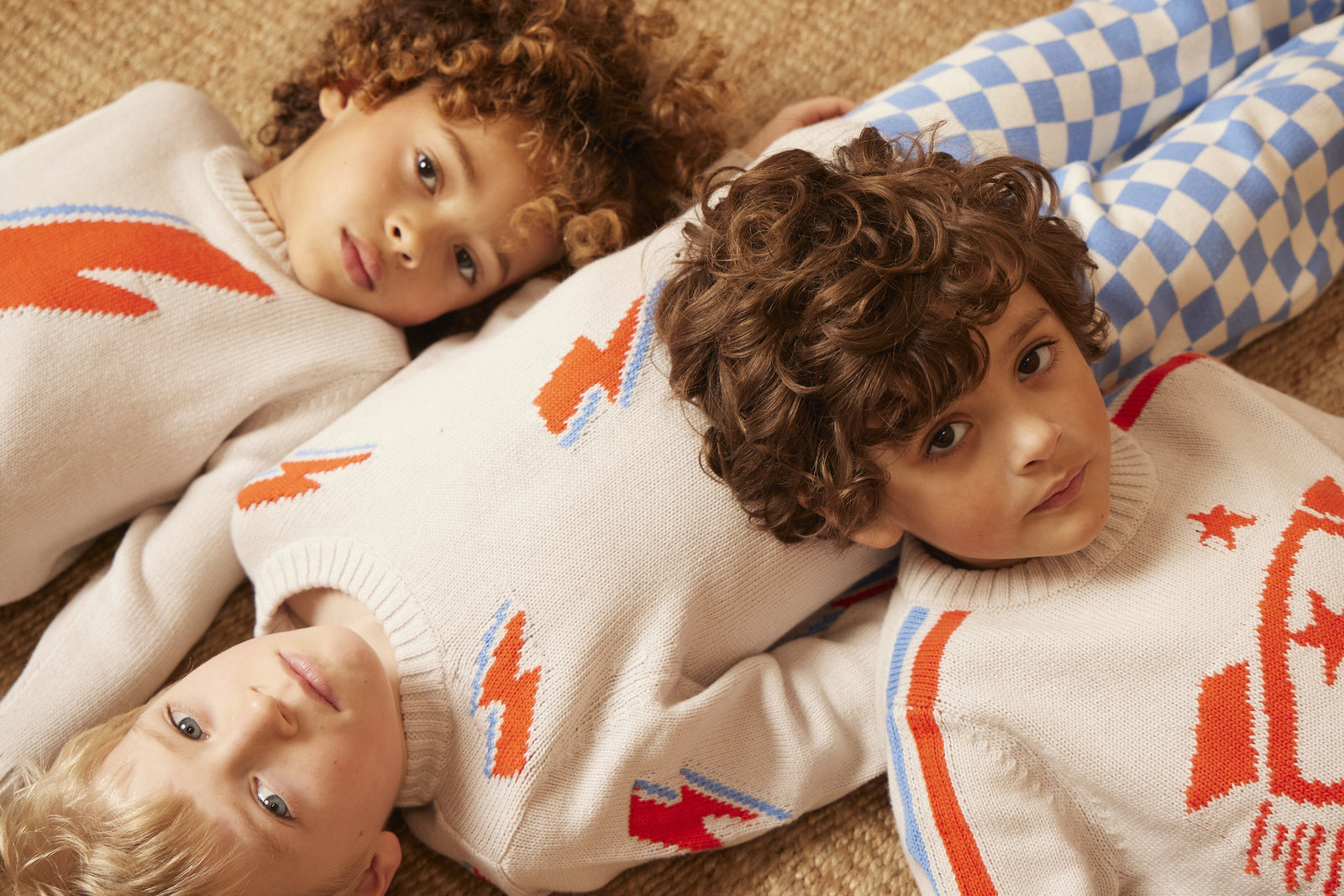
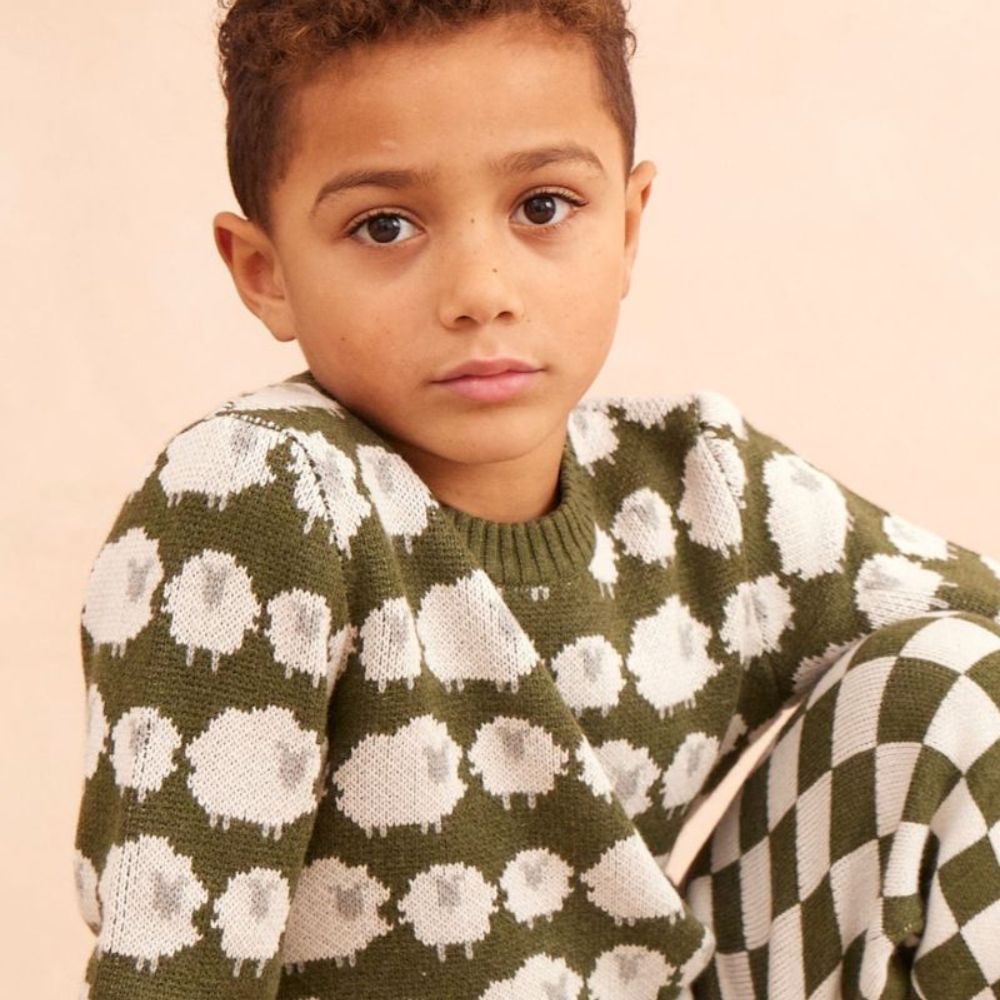
Non-uniform days are the moment when a child's personal style gets to show — and when the quality of their non-school wardrobe becomes visible. A well-chosen piece in our 95/5 organic cotton cashmere blend stands out immediately: the fabric has a quality and softness that reads as considered, even on a seven-year-old.