

The shift from summer to autumn is one of the most useful moments in the slow fashion calendar. It's the natural point to audit what's been worn, what's been outgrown, what needs replacing — and to make intentional decisions about what comes next, rather than simply buying whatever the shops are pushing.
The Summer Audit
Before buying anything for autumn, go through the summer wardrobe with clear eyes. For each piece, ask:
- Was it actually worn? (If not, why not — and would the same mistake be made again?)
- Does it still fit? (Children grow fast; a piece that fitted in June may not fit in September)
- Is it in good condition? (Quality natural fibre pieces should still look good after a summer of wear)
- Can it transition into autumn? (A fine-knit layer worn alone in summer can be worn under a jacket in autumn)
Pieces that pass all four questions stay. Everything else — donate, pass on, or set aside for a younger sibling.
The Transition Pieces: What Works Across Both Seasons
The most valuable pieces in a children's wardrobe are the ones that work across seasons. In natural fibres, this is more achievable than most parents realise:
- Fine-knit cardigans — worn alone over a t-shirt in early autumn, layered under a jacket as temperatures drop. Our girls' 95/5 cardigans are designed exactly for this role
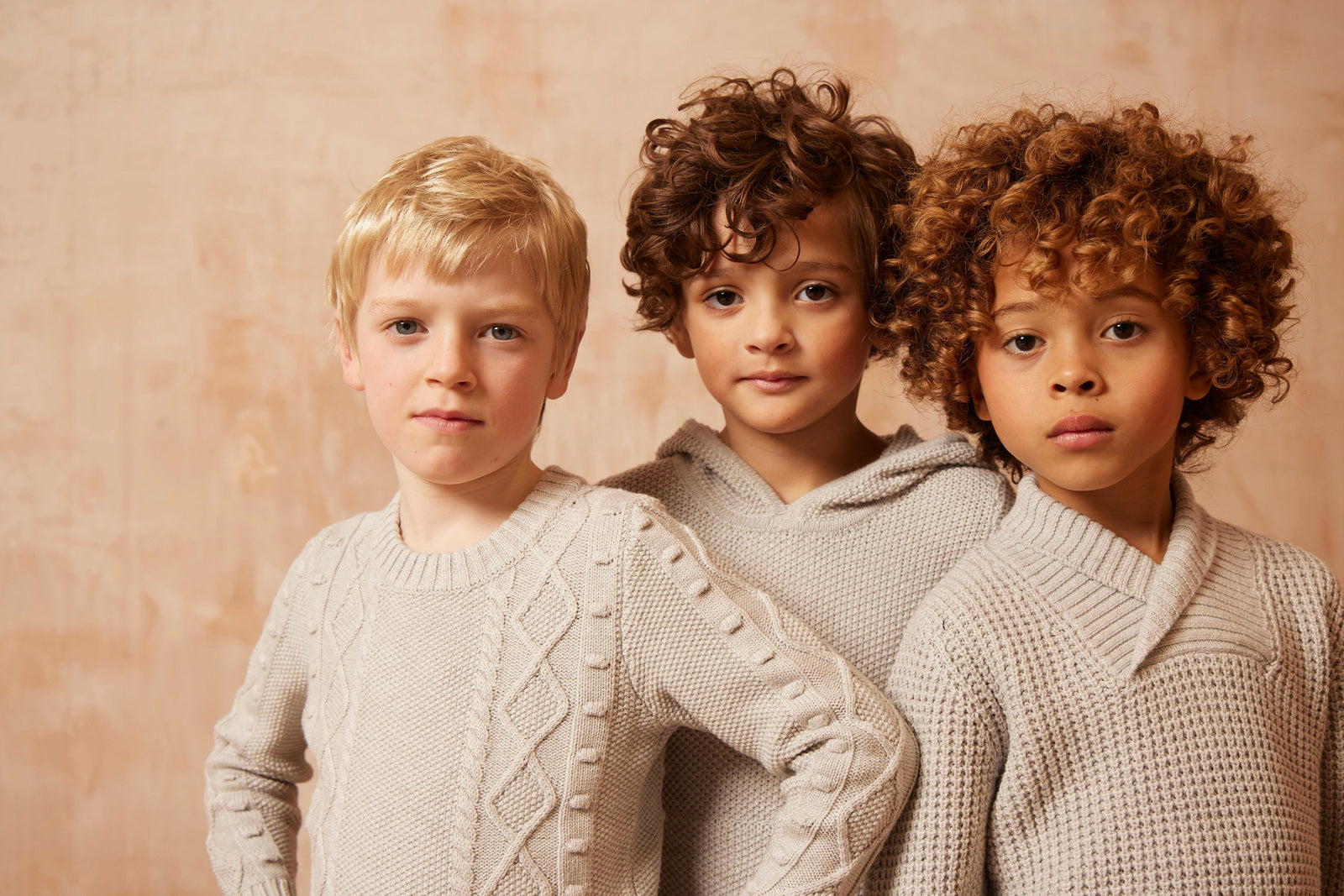
- Lightweight jumpers — the boys' fine-knit hoodies that worked as an evening layer in summer become the mid-layer of an autumn outfit
- Neutral-toned trousers and skirts — summer bottoms in navy, grey, or oatmeal work just as well in autumn paired with warmer tops
The key is that these pieces were chosen in natural fibres and neutral tones — which is exactly why the slow fashion approach to summer dressing pays dividends in autumn.
What to Add for Autumn
Once you know what transitions from summer, the gaps become clear. For most children, the autumn additions are modest:
- 1–2 warmer layers — a slightly heavier knit for cooler days
- 1 outer layer — a jacket or coat that works over the existing wardrobe
- Warmer bottoms — if summer was all shorts and light skirts, a pair of warmer trousers
That's typically three to four pieces — not a full wardrobe refresh. The slow fashion approach to seasonal transitions is additive, not replacement.
The Layering Logic for Autumn
Autumn dressing is layering dressing. The goal is pieces that can be added and removed as the day changes — cool mornings, warmer afternoons, cool evenings again. Our 95% organic cotton, 5% cashmere blend is particularly well-suited to this because it's warm enough to be a genuine layer but light enough not to create bulk when stacked.
A typical autumn layering formula for children:
- Base: organic cotton long-sleeve top
- Mid-layer: 95/5 cardigan or fine-knit jumper
- Outer: light jacket for the coldest part of the day
Three layers, all removable, all in natural fibres. Simple and effective.
Caring for Summer Pieces Before Storage
Before putting summer pieces away, wash everything — even pieces that seem clean. Natural fibres stored with invisible residues (sunscreen, body oils, food traces) are more attractive to moths and more likely to develop stains that set over time. Wash, dry flat, fold, and store in breathable bags with cedar or lavender. They'll come out next summer in the same condition they went in.