

There is, somewhere in your house, a jumper.
Folded into the bottom of a drawer, or pushed to the back of a wardrobe. Once it was the favourite — the one your daughter pulled on every Saturday morning, the one your son refused to take off for a whole winter. Now it has a small hole at the elbow, or a snagged cuff, or a button that has walked off. It is too good to throw away. It is too imperfect to wear. It is too small for the child it was bought for.
That jumper, multiplied across millions of homes, is the most expensive ingredient in fashion.
In our line of work, we are taught to think about the life of a garment in months: a season, a campaign, a collection. The truth, especially in children's clothing, is that the timeline is both much longer and much shorter than that. Children outgrow a jumper every six months in their first three years of life. By the time a piece has been loved into shape, the child has moved on. The piece itself, however, is barely halfway through its life.
The arithmetic is uncomfortable. Approximately ninety-two million tonnes of textile waste leaves households each year, globally. Less than one per cent of what we make is ever recycled into something new. A wool garment in landfill is biodegradable, but it decomposes anaerobically and releases methane as it goes. So the carbon cost of the most beautiful cashmere cardigan you have ever bought your child is not paid at the till. It is paid much later, when nobody is looking.
We come from a wool family.
Four generations ago, my husband's great-grandfather Herbert ran a woollen mill in Edinburgh and wove tweed. His son Drummond carried the mill forward, and his Macnab tweeds were sold across Europe and the United States. Drummond's son Peter, forty years ago, walked into the Mongolian steppe and began a partnership with the cashmere herders we still work with today.
In each of those four generations, repair was not a programme. It was a fact. Tweed was woven, worn, mended, passed on, mended again. The mill kept the skill of mending alongside the looms because the work of mending was the work. There was no separate department for repairs. There was no special programme. There was no explanation needed for why something that had been carefully made should be carefully kept.
Somewhere between then and now, the modern luxury industry forgot how to mend. Manufacturing moved further from the customer, and further from the maker. The skills of darning, rebuilding and rejoining moved with it — into specialist workshops a buyer is never invited to see. The piece you bought became a finished object the moment it left the shop. Anything that happened to it after was your problem.
We don't accept that.
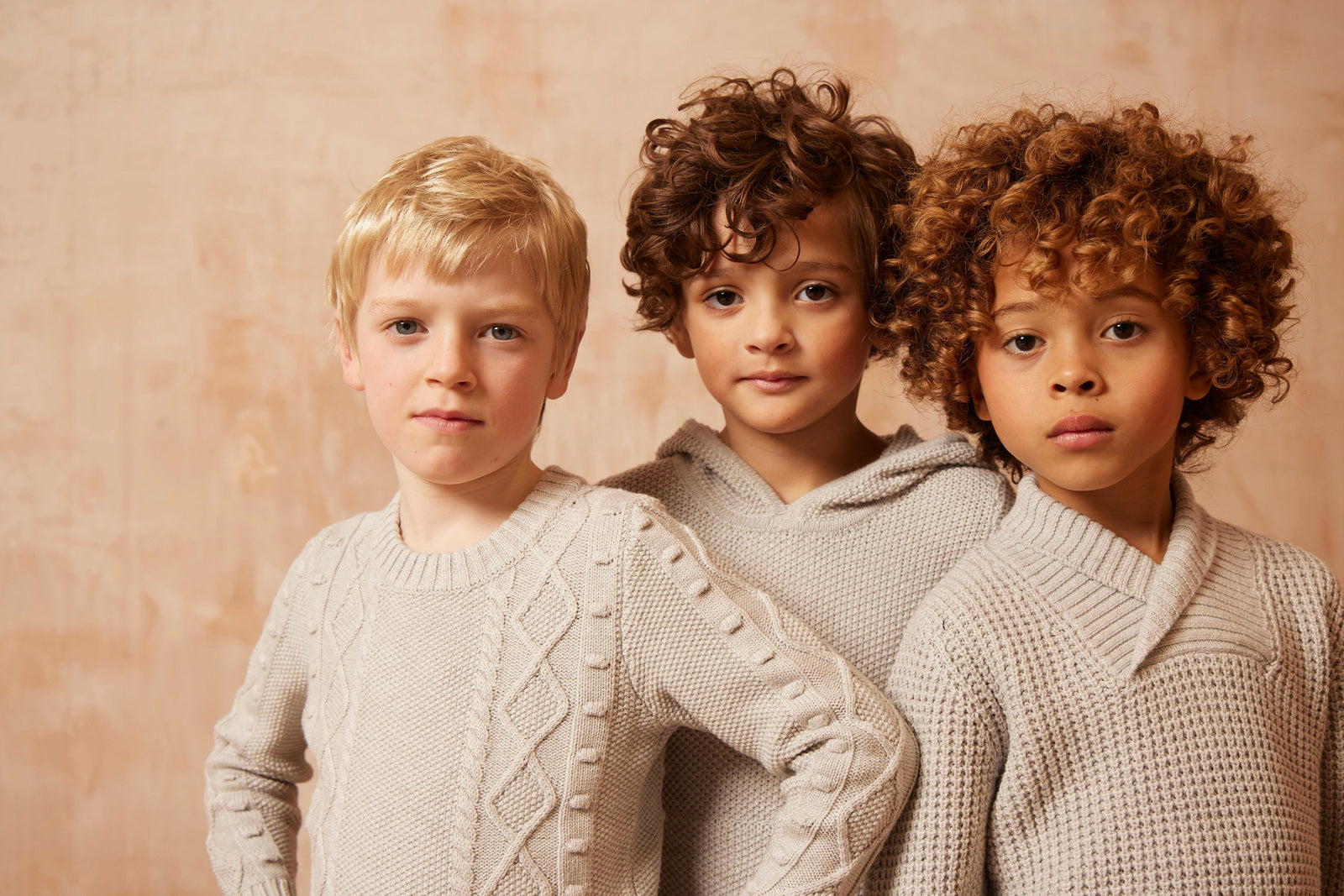
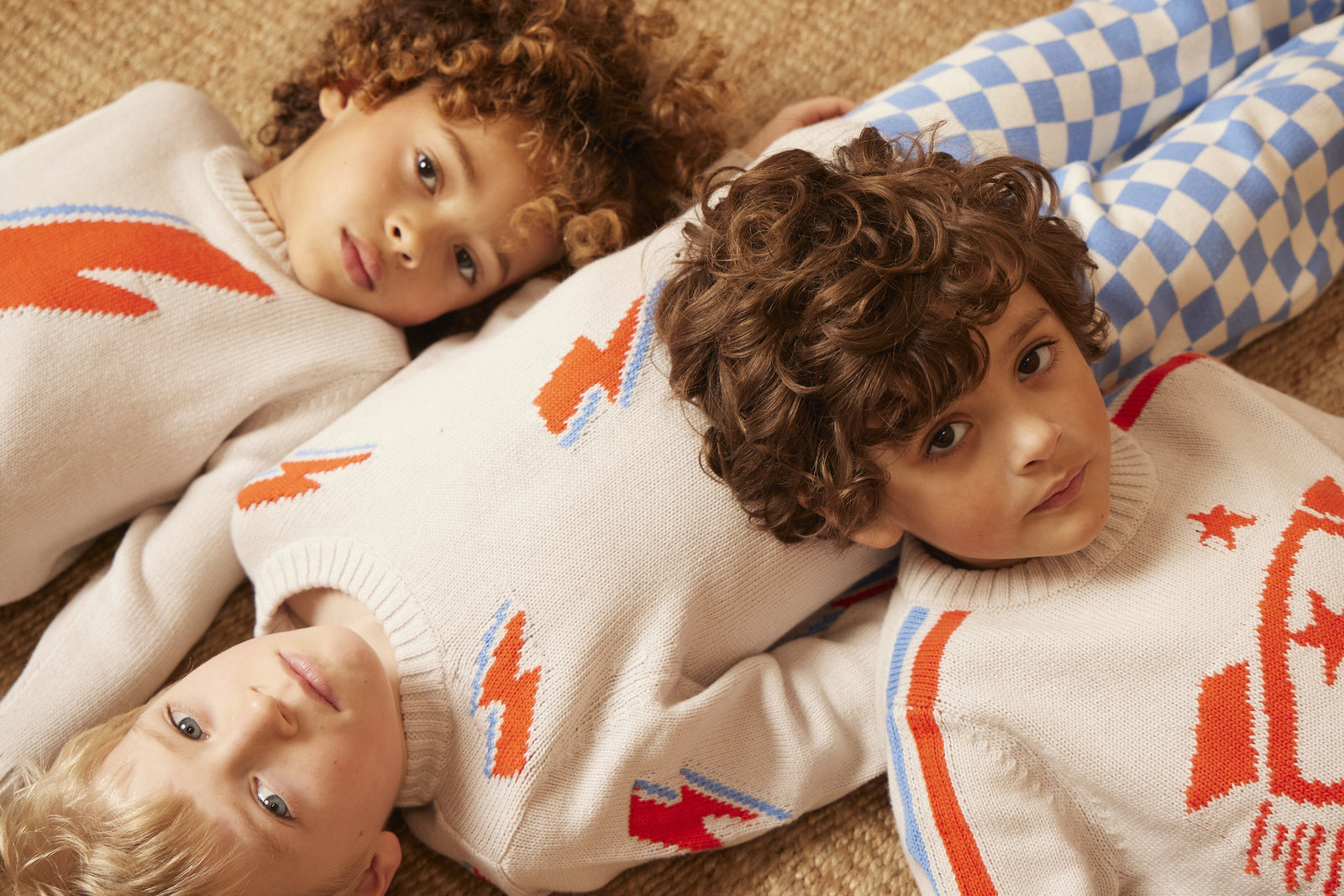
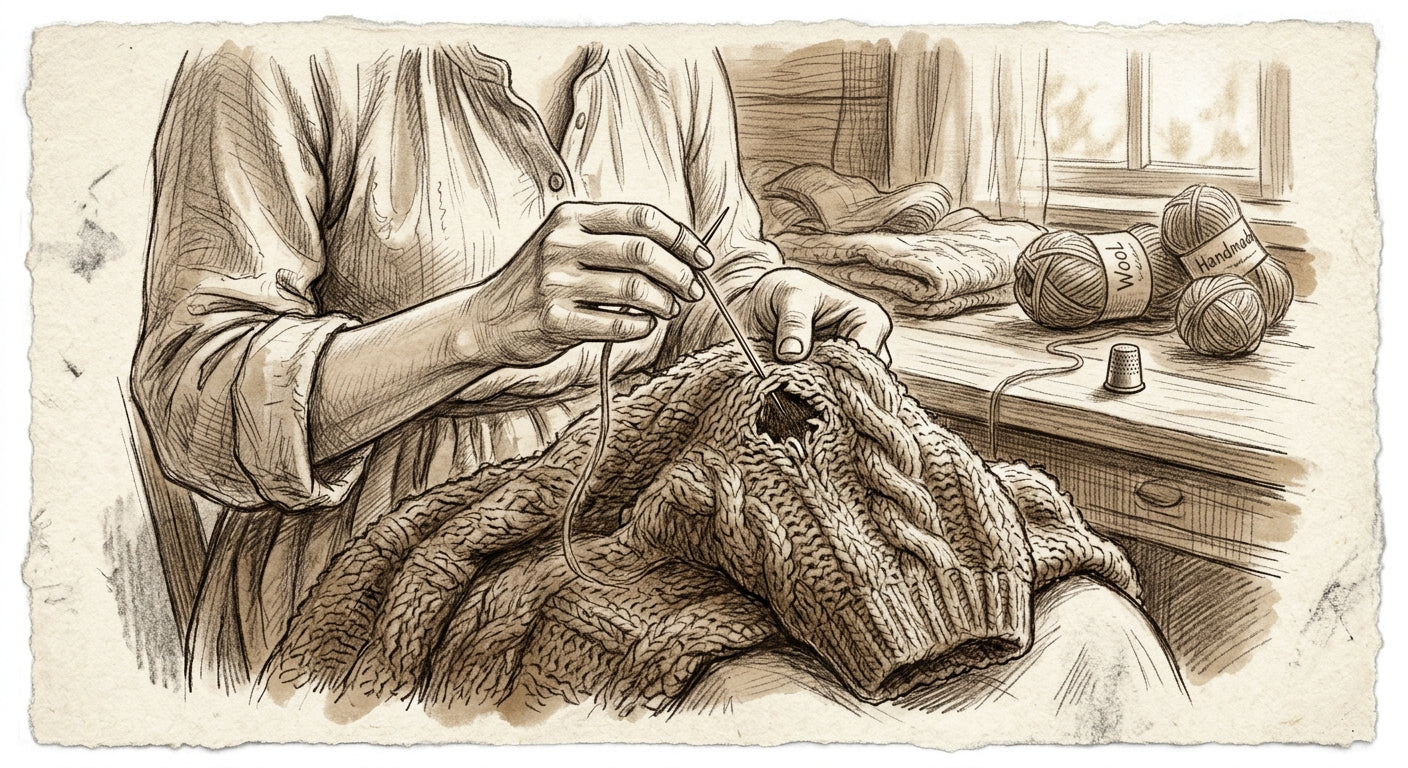
Every MIKA & MILO piece is woven from a single blend — 95% GOTS-certified organic cotton and 5% Inner Mongolian cashmere — and knitted by hands that have worked with our family for decades. The same hands that knit a cardigan can mend it. They know the yarn. They know the tension. They know the stitch. The repair of a MIKA & MILO piece is not a separate skill. It is the same skill, applied later in the garment's life.
Because of that, repair has always been operationally possible for us. What we have done now, with Mended, is make it our promise.
Every piece we make comes with a lifetime repair guarantee. Pilling, holes, snags, weakened seams, buttons that have walked off — send it in and we will fix it free, then ship it home ready for the next child. We do not ask for receipts. The promise lives on the piece, not the order.
There is a sentence that has been quietly running through my head for years, ever since we began MIKA & MILO. It is this: we make pieces for a childhood, and we would like to make them last for two.
That is the goal. To make a jumper that, by the time it is too small for your child, has only finished its first chapter. To make pieces that move sideways through families — between siblings and cousins and friends — before they ever move backwards into a charity bag or forwards into a landfill. To repair the small things that go wrong along the way, with the same hands that made the piece in the first place.
We won't get this right every time. There will be pieces that come back beyond repair. There will be families who don't have anyone to pass things on to. There will be days when our promise feels more difficult to keep than we expected. We will tell you about those days too, because honesty is part of what we owe.
But the philosophy is settled. We make pieces to be lived in, washed, mended, and passed on. Mended is how we keep that promise — in writing, in operations, and now, on every label.
— Aiko